Builder & Architect
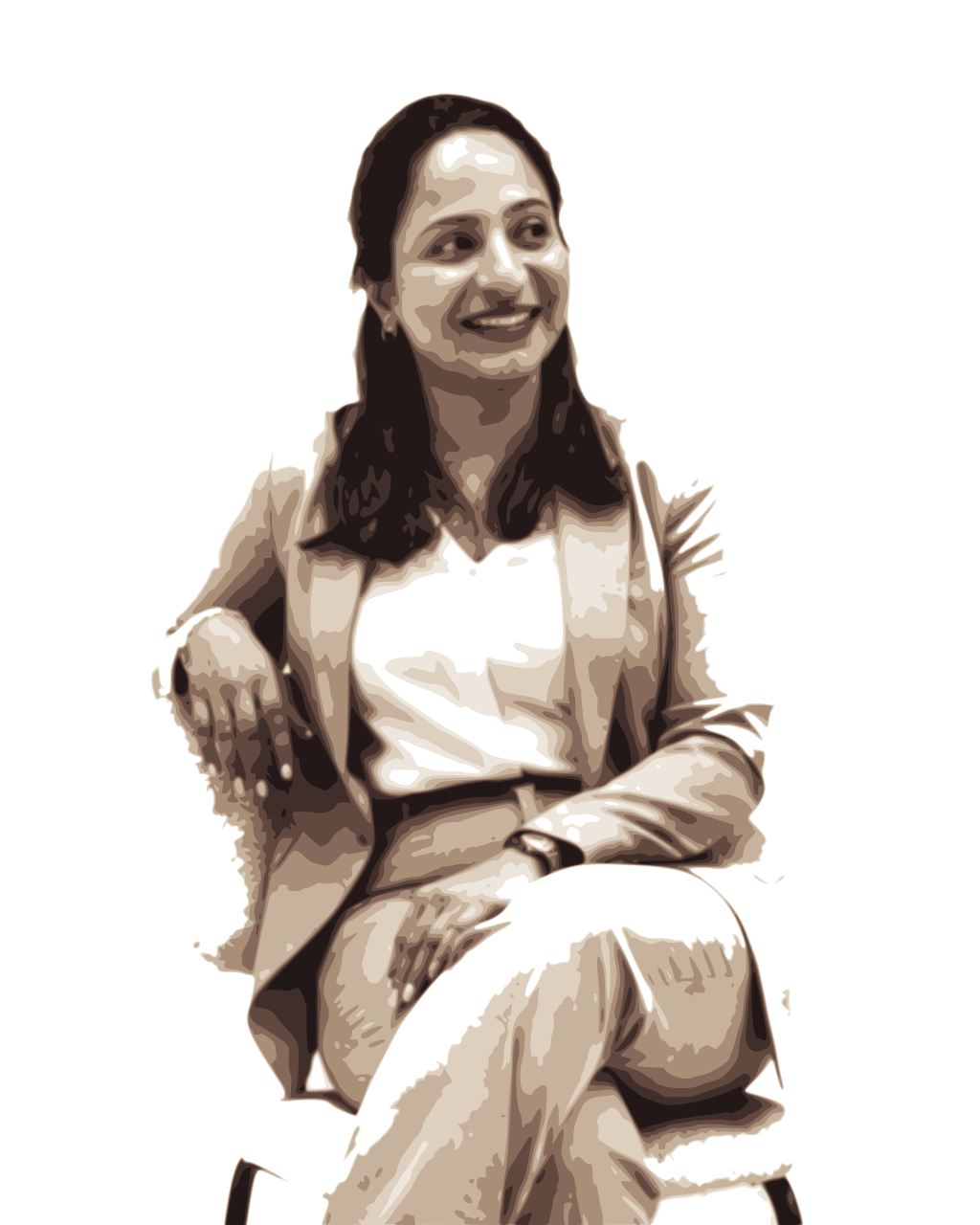
Builder by instinct, architect by training. I make multi-agent systems, AI tools, delivery engines, and the unfashionable plumbing that keeps them all talking. The good ones don't need me to run them. Which is the whole point.
digital solutions lead · ai delivery architect · dubai
They all keep running after I close the laptop.
Digital delivery, AI systems, and the unglamorous middle work between them. Title varies by week.
This page runs in the six phases I deliver in. Each gate locks as you pass it.
about
I was born in a hill station in the south of India. Greenery, calm, steady. The kind of place anyone would love to grow up in. The world I work in now is noisy, hot, and very fast. Both feel like home, for different reasons.
I started writing code before I'd finished my postgrad. Junior developer was the first job. Math came easily as a kid, so the work felt natural. Mentors filled in everything else. A few years in, I moved home for family reasons. I'm not built to sit still, so I took a head of IT role at a local college.
An accident that turned out to be the most important pivot. The college needed someone to teach Artificial Intelligence and nobody else would. I took the subject. To teach it I had to learn it deeply, and that's where AI stopped being a buzzword and started being a tool I could actually use.
Developer first, then solutions architect, then the person accountable for delivery across enterprise clients in AI, government, finance, hospitality, and retail.
I've watched the digital world evolve from CRT monitors and pagers to AI agents running while my laptop sits closed. That arc is what keeps me curious. AI's moving faster than anyone predicted, which I don't find scary. I find it useful.
The world I want to keep building toward is one where I can be at the grocery store and still know what's happening at work, because the systems already know.
I like clarity. I don't sit well with confusion, loose ends, or things that don't make sense.
I break messy operations down, structure them, and move them forward. If something is unclear, I define it. If something is stuck, I unblock it. I connect business, technology, and execution, and I hold the quality bar while doing it. High standards, for myself first.
The work I care about most is leverage. I build teams and platforms that don't depend on me being in the room. The point was never to keep things running. It's to design how things run, and make the business better for it.
how I work
Brief, scope, decision-rights matrix, written sign-off.
Visual design (web), system architecture (AI), technical decisions.
Implementation, integrations, content.
QA, AI evals, accessibility, performance, safety.
Launch, training, runbooks, AMC plan.
Post-launch maintenance, monitoring, iteration.
"Process isn't paperwork. It's the part that keeps people from burning out."
four facets
Builder by instinct, architect by training. I make multi-agent systems, AI tools, delivery engines, and the unfashionable plumbing that keeps them all talking. The good ones don't need me to run them. Which is the whole point.
Delivery doesn't fail in the building. It fails in the gaps. Between client and designer, designer and dev, dev and AI. The Middle is where I work. Sequencing, translation, holding the thread. Not glamorous, often invisible, structurally load-bearing.
"The hardest delivery I've ever run, nobody paid me for."
Most of what I know about scope, stakeholders, sequencing, and saying no, I learned at home first. Work just gave it a vocabulary.
I keep houseplants alive on purpose. I cook. I paint. I make most things creative if I can start with my hands. When the laptop closes, I'm home with my husband and son. That's the whole list.
"If it can't run while I sleep, it isn't a system."
things I've built (that still run)
Five systems in production. No product names, no logos, no theatre. What each one is, and what it quietly replaced.
Daily briefs, end-of-day summaries, and weekly forecasts for a lean delivery team. The agents watch, read, draft, and flag what actually needs a human.
Recurring meetings, three spreadsheets, and most of my admin time.
Tracks 20+ digital builds end-to-end. Done means done, or it isn't this phase.
A shared spreadsheet that broke every time someone touched it.
Drop in a discovery doc, get back a sitemap and wireframe spec.
Hours of architecting per project.
Classifies, routes, and tags incoming requests by SLA.
An inbox of unsorted maintenance emails.
Feedback, approvals, and signed-off scope in one place.
Lost email threads no one could find later.
work
No client names here, that's a rule. Three of those systems, opened up, and the actual artifacts of how I work.
The 14-build spreadsheet was the breaking point. The system that replaced it runs 322 agents.
A lean delivery team coordinating a growing portfolio through recurring meetings, three separate spreadsheets, and a daily pile of admin. Every status update was manual.
An agent-based operations platform instead of another tool subscription. Specialised agents watch channels, read meetings, draft updates, and escalate only what needs a human. Phase-lock discipline and approval gates built in from day one, so nothing reaches a client without sign-off.
322 agents in production running daily briefs, end-of-day summaries, and weekly forecasts. The recurring meetings and the three spreadsheets are gone. The system runs after the laptop closes, which was the whole brief.
Claude API · Node.js · MongoDB · Slack + Gmail + meeting-intelligence webhooks
Three weeks. That's how long a phase can live at "almost done" before you accept that "almost" is the actual problem. Now phases lock.
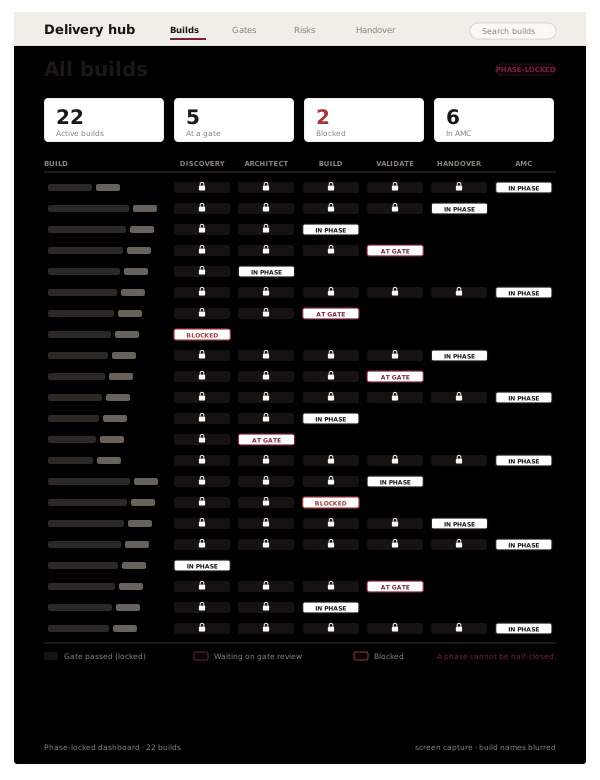
Twenty-plus concurrent builds tracked in a shared spreadsheet that broke every time someone touched it. Phases lived at "almost done" for weeks because nothing forced a decision.
A phase-locked delivery hub: Discovery, Architect, Build, Validate, Handover, AMC. Each phase has entry and exit gates, owners, and review windows. A phase cannot be half-closed. Done means done, or it isn't this phase.
Every build visible end-to-end in one place: phase, gate status, blockers, finances, handover stage. The spreadsheet is retired, and "almost done" stopped being an acceptable status.
Node.js · MongoDB · review-gate + change-request workflow · Slack integration
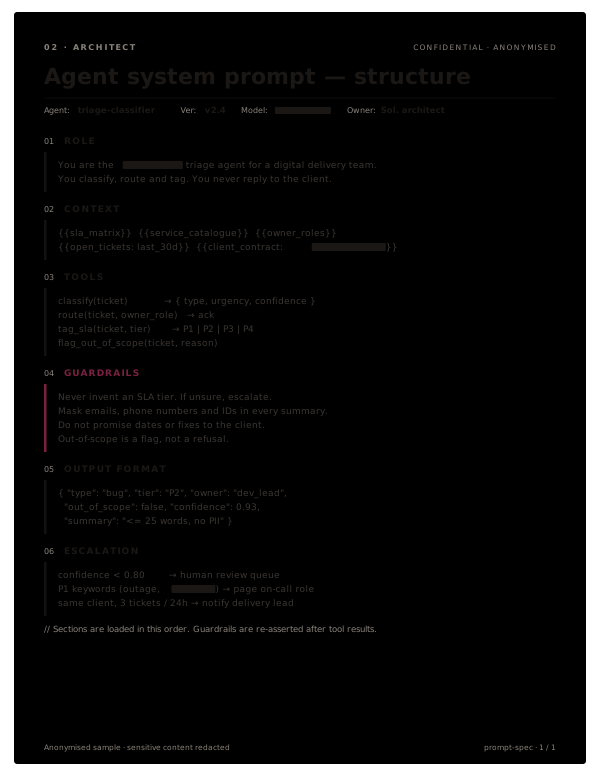
An inbox of unsorted maintenance emails. Urgent issues buried under routine requests, out-of-scope asks quietly absorbed instead of flagged, and triage eating senior time every single day.
An AI classifier in front of the inbox. Every incoming request is read, classified by type and urgency, routed to the right owner, and tagged against its SLA. Out-of-scope requests get flagged as opportunities instead of disappearing into goodwill.
The manual triage queue is gone. Requests arrive pre-sorted with SLA tags, nothing urgent waits behind routine noise, and scope creep became visible enough to charge for.
Claude API · email webhooks · SLA rules engine · CMS integration
"Good delivery is 80% deciding, 20% doing."
under the hood
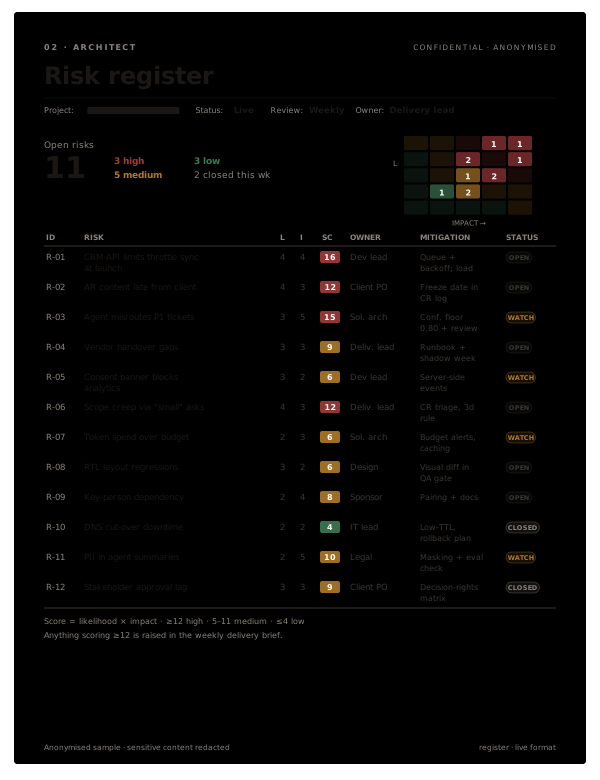
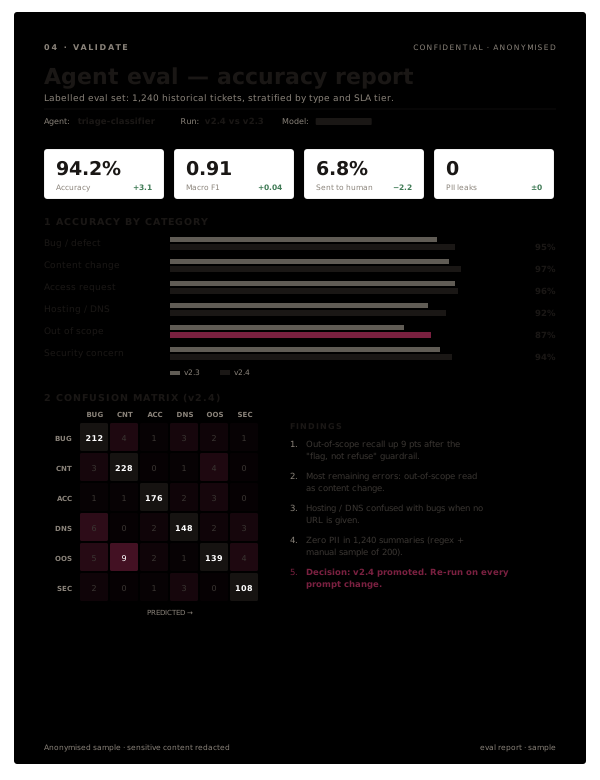
Twelve anonymised snippets of the actual working documents, walking Discovery through AMC. Sensitive content redacted.
services
Four ways to engage, depending on what you need. Same phase-lock discipline in all of them.
I run your digital delivery from brief to live. Team, timeline, quality bar. I hold all three so your delivery doesn't fall apart in the gaps.
I design AI agents and automations for teams that hate doing the same thing twice. Most of what I build runs without me in the room.
Senior eyes on your delivery, your stack, or your AI strategy. I audit, advise, and architect for teams that need a builder without a permanent hire.
Built an AI tool or agent? I run an independent assurance review and hand you a report you can keep and share with your own clients as evidence of due diligence.
"I run delivery the way I run my mornings. Decisions early, surprises rare."
the roster
hire me
"I do my best work in the rooms nobody's documenting."
Take on Digital Delivery Leadership, AI Systems & Automation, or a combined engagement. Scoped in discovery. Project-based pricing.
Start the conversationSprint-shaped audits, AI strategy sessions, or ongoing retainer. Day rate or monthly retainer.
Ask for a scope
If you're not sure which of the above you need, or just want to talk through a problem. No agenda, no follow-up sequence.
Book the callfaq
Currently fractional and project-based. Full-time only for the right role. The question I always ask in return: what does the growth trajectory look like?
Yes. Most of my delivery work runs async anyway. Remote-first by default. On-site visits when my schedule allows.
A two-week audit or a one-day strategy session. Below that, the discovery overhead eats the work.
Yes. Most of my Senior Advisory engagements start there. The first deliverable is usually a short list of which workflows to automate and which to leave alone.
Yes. hello@mubeena.tech.
Yes, mutual NDA on request before the first call. I don't sign one-way NDAs.
now · updated monthly
| Item | Note | Status |
|---|---|---|
| mubeena.tech | This site. | launching |
| A small AI agent for my indoor plants | Because at some point the AI should remind me to water them. | building, mostly for laughs |
| An open-source agent template library | Releasing the system prompts, eval harnesses, and runbooks I've actually used in production. | architecting |
| An AI delivery audit tool | Scores a team's process and names the first three workflows worth automating. | planning |
| PM Suite v2 | Broader, multi-tenant version of my 322-agent ops platform. | in progress |
listening / learning
The podcast I have on when I'm cooking. Practitioner-led AI engineering, no hype. The closest thing to a peer group I have right now.
Builders and investors talking AI. Useful when I want to know what the people writing the cheques are thinking.
For the culture and policy side of AI, not just the engineering.
curriculum vitae
Digital solutions lead. AI delivery architect. Builds cross-functional teams that deliver digital and AI work in production.
"Tools are cheap. Discipline isn't."
↓ Download the CVThe earlier roles live on the CV. Download it →
the big question
"If the work runs without me in the room, what's the version of me that's worth hiring?"